Showing posts with label Artist to Artist. Show all posts

Monday, October 3, 2011

Artist to Artist: Louise


Artist to Artist is a regular feature for still life 365. Through a dialogue about the creative process, grief, loss and art, the idea is to learn more about the art you see on still life 365 and the mother, father or family member creating it. In turn, we hope you learn more about your own art, creative process and grief. Artist to Artist a regular monthly feature of this blog space. If you have an artist that you would like to learn more about, or interview, please email me.
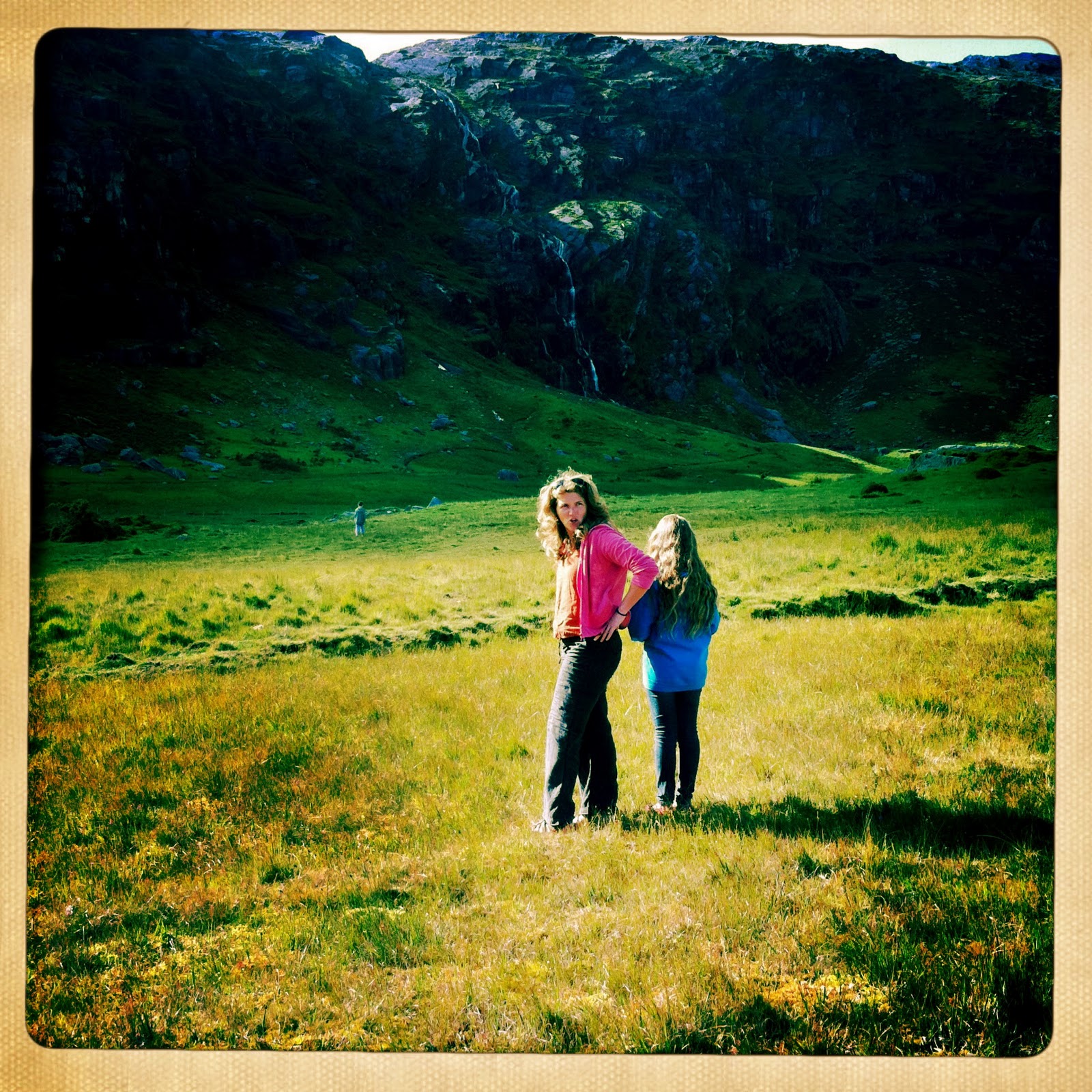
 

Louise is a mother, a part-time educator/artist/student/writer from the south of Ireland. Laura, her fourth child, was born in May 2009, a wonderful gift she had hardly dared hope for, as Louise describes it. I first met Louise through her writing on Radar of Chance. She is, without exaggeration, one of my favorite writers in the world. Her work is so evocative, beautiful, heartbreaking. When she first submitted a piece to still life 365, I found her art to be just as moving, her insights just as important. Later I found out that Louise was working on her thesis surrounding art and therapy in group settings. Her work is fascinating. When she offered to guest edit still life 365, I was so excited to see how she would engage this community and inspire us all.

With that brief, and not nearly complete enough introduction, it is my great pleasure to introduce October's guest editor, Louise. We decided to kick off the month by having an artist to artist conversation, so you can get to know her a little better. We talked recently about art, creativity and grief.

Hi, Louise, thanks for agreeing to talk to me about art and grief. Let me just first say how sorry that Laura is not with you.

Thank you Angie. It is a pleasure to talk to you and can I say how sorry I am that Lucy isn’t here with you?

Thank you. Can you tell us a bit about Laura and your family? Your husband Kieran has submitted work to still life 365 as well.

Sure – where to start…

Laura was our fourth child. We already had a daughter, Alannah (the Giraffe Princess) and two boys, Michael (Astro Boy) and Oscar (the Little Boy Racer.) They were each born two years apart with what appeared like precision family planning, but was in fact entirely due to the wonders of Clomid and our fair share of ttc heartache.

Laura happened along all on her very own. I had always fanticized about being one of those women who conceives without any intervention, who finds herself surprised by new life suddenly and unexpectedly growing within her. So whilst Laura wasn’t planned, she was dreamed of and longed for  – a gift I had hardly dared hope for.

Kieran and I have just celebrated our twelfth wedding anniversary. We both work in the arts. Kieran is a graphic designer and can’t stop taking photographs. Our computer literally groans under the weight of them. He has submitted some photos to Still Life 365 in the past.

We live up on a hill in a city in the south Ireland, in an old house we bought thirteen years ago, fully intending to move on within five years. After several failed attempts to move, we are currently revising these plans and have decided to extend. We share our house with Owen, the cross-eyed cat and rather a lot of spiders.

The Spiders and a Cross-eyed Cat would make a great band name. 
I always like to kick off these chats with just a brief overview of how art played a role in your life before Laura died. You are a beautiful writer, and a stunning visual artist as well. Have you always been an artist? Do you have one medium that you gravitate towards?

I have always loved art and I was labeled as the artist at home and in school. How bad? It seemed obvious that I would go to art college and I wandered happily along that route. Although drawing came easily to me, allowing myself the freedom to create was more of a struggle. You referred to Rachel (Curls o Fred) before and her comment “the paralysis of perfection.” I think I suffered from that pretty badly and found myself studying graphic design more out of a fear of expressing myself than a love of design.

As part of an illustration module I did a short course in the print department in college. I still remember the day I walked into that department. It was like coming home. Printmaking was my thing. There is a whole ordered process behind it that really suited me. I could express myself, but it felt safe.

I worked with poems I had written and somewhere in the middle developed an interest in fabric and sewing too. And that is where I have lingered – somewhere between print-making and sewing, the written word, mixed media and (these days) computer manipulated images aswell. More often than not, they are all combined together.

Although I am much more secure in my creativity these days, since the kids came along there hasn’t been much art-making going on. My creative energies are getting used up elsewhere in life.

I talked a little about your thesis in the introduction, and congratulations on recently finishing your Masters degree. Can you talk a little about your work? How was your work impacted since Laura's death?

Thanks Angie. It feels SO good to have the Masters completed.

Learning is lonely., Louise.
This is always a difficult question for me. My family joke that none of them could really tell you what I do so I am endeavoring to do here what I have never successfully done for my family. I work as a lecturer in the Art Therapy & Continuing Education Dept in an Art College. My main responsibility is training people to facilitate groups through art making.

Having trained as an art teacher without ever wanting to work in mainstream education, I returned to my hometown to explore the idea of art therapy as a career. I began working as a community artist and discovered a whole way of working I’d never known about and enjoyed it too much to go on and train as an art therapist. These days I train people to work in this area; artists who are looking for group work skills, social workers that are looking for art skills and a whole spectrum of individuals in between.

Returning to work after Laura’s death was very difficult. Working as a group facilitator, I am always telling people how important it is to be yourself with the group. And yet, I am discovering there is a difference between being yourself and spilling yourself all over the group. I wanted everyone to know about Laura. I felt I wasn’t being honest sitting there keeping going when inside I was falling apart. It was incredibly difficult to be present for people when inside I was screaming “You have no idea!” Even though I love my work, for a long time I wanted nothing to do with it. All I wanted was to be with my family. I didn’t spill to the group. I spilled to my colleagues instead, but I work in an Art Therapy Dept so they were qualified to be with me in my grief! I guess that could be considered a perk.

I think I am braver in my work these days – less afraid of people. “What’s the worst that can happen?” I feel I am simultaneously more accommodating and more challenging.

Laura had a big impact on my work in her life too. We were told at our twelve-week scan that there was a risk she might have Down’s syndrome. Most of the people I train work with marginalized groups of people. An aspect of the training focuses on equality issues. Over the years I have often delivered training on disability equality and the medical and social models of disability.

My pregnancy was closely monitored because of the possible risks to Laura’s health. She became a medical concern. Everything was about her possible physical complications, deviations from the way she should be. I would be lying if I pretended all the uncertainty wasn’t hugely traumatic, but through it all was an absolute certainty that Laura was simply our Laura. The medical concerns and labels weren’t “in addition” to who she was. She was who she was right from her very beginning.

As I’m trying to clarify this in my head, I think it is like if you write a blog post and you create this piece that is words and imagery and maybe eloquence and beauty, or whatever it is. It is a creation. Then you put a few tags down at the bottom and all anyone focuses on is one particular tag. They don’t look at or can’t see the piece for what it is. Despite years of teaching this idea to people, I never really got it until I was pregnant with Laura.

That is a very powerful revelation. I could relate to it very closely just from having to qualify my children as living and dead when asked how many I have. How do you think your art has changed because of your grief? 

A friend brought a pencil and notebook in to me when I was in hospital waiting to deliver Laura, just in case…. It was that book that started me writing and it was also that book that enabled both Kieran and I to draw Laura while she was still with us, lying there right beside us. Later that evening I traced Laura’s hand. It felt so important to acknowledge that she was physically here while she was physically here.

That is such a beautiful idea, to draw her, then trace her hand. Wow, I can see that act in my mind, and how gentle and important it must have been.

During my pregnancy Alannah had come home from school one day with a “Baby Annabell” sheep she had found on the pavement. She thought it might be nice for the baby. We had washed it and kept it. The day before Laura’s funeral Alannah remembered the sheep and we spent the afternoon making a velvet pillow for Laura and quilting the sheep on to it. I sewed a butterfly then and appliquéd it onto a hat for Laura to wear. Creating for my baby was a physical need.

When I initially heard this question my first reaction was to think, I hardly make art these days, but that isn’t true. My art these days is less ideas based and more just hands-on physical making out of a need to just engage in the process. Allowing my creativity room to breath, room to engage with the everyday, is what is important to me now.

One outcome of going to art college was becoming a slave to standards and dismissing so much of the creative process I was engaged in because it wasn’t really art. That has all changed. I bought a book recently called “Making is Connecting” by a man called David Gauntlett. He explores the idea of making and creativity literally from knitting to the internet and the connection that this offers. That kind of captures where I am at these days. My art is about making and connecting whether that is making candles in my kitchen with friends or blogging on the internet.


Falling Asleep, Louise.
Yes! For me too, art is about connection and idea making. I love that you quoted Rachel earlier and then talked about this as an artist. It really is so hard to let go of those standards and engage in the process. People talk about it so much it almost sounds trite, but to truly to do it revelatory. At least it was for me.

And how do you think your grief has changed because of your art?


How has my grief changed because of my art? Hmm. Room to breath. My grief has been given room. When I was pregnant, Mikey drew his own version of picture I had made and called it a musical black hole. He had a big long complicated Astro Boy description of the picture. That picture has really stayed with me. If grief is a black hole, my art has enabled me to explore this black hole and given me a language of metaphors and symbols to try and navigate through it. When I have been suffocating in grief, giving my head a break and allowing my hands just do, whether or not I can make any sense of the end results, has given me room to breath.  

 
I love how you articulated that. Giving your head a break and allowing your hands to do. Going back to connection with art, I have found that as much as creating art has been part of your grief, viewing art becomes part of this journey too. How has connecting with other grieving artists helped you?


It is hard separating creative experience out into all its various parts. For me (and maybe this comes from working with groups and encouraging collaborative creativity) it is all so intertwined. I have resonated with other’s stories, with feelings they have described and with the images they have created both with art materials and, through their words, in my mind. I have resonated with all these different aspects and they, in turn then, have inspired a new idea or image or enabled me to tap into an aspect of my grief that had been bubbling under the surface, but I hadn’t yet explored. Connecting with others has been the single most important aspect of my grieving journey. Discovering Still Life 365 and Glow in the Woods and the creativity contained in these spaces was like the coming home experience I had all those years ago in the Print department in art college.

still life 365 feels like home to me too. Thank you so much for agreeing to guest edit for the month of October. It is a month so rife with symbolism and importance in this community and society at large with Samhaim, Halloween, Dia de los Muertos, not to mention Pregnancy and Infant Loss Remembrance Month. I was so curious to see what theme or idea you would come up with for this month. Can you talk a little about your inspiration and what you envision this month being?

I really believe that art is a process we can all engage with. For many of us though art making is fraught with fear and insecurity. I love finding ways for people to partake in a creative project that asks nothing more than that you participate. It is the gathering or joining together of each of our efforts that creates something that is so much more than the sum of its parts.

I am rediscovering the pleasures of taking photos these days after upgrading to a phone with a built in camera. This rediscovery is also reminding me of how much is said and unsaid in photos.

Photographs are a very accessible medium for most people. I wanted to suggest an idea that would be easy to take part in. I know I am always filled with good intentions to do something and suddenly it is three weeks later so I wanted to come up with an idea that even I could follow through on with relative ease in a short space of time.

When I offered to guest edit October I wasn’t thinking about it being Pregnancy and Infant Loss Remembrance Month, but when I realized the significance of the month I wanted to acknowledge it in the theme. So that is where the idea came from – Life as we know it: what does it look like?

Take a photograph of any aspect of your life now and send it in…

I am working on an idea for the community poem linked to this theme. I will post details in the next few days.

Awesome. I love this theme. It is accessible and also very profound. It is in the ordinary that we truly miss our children. Thank you so much for talking to me and for guest editing this space. I can't wait to see and read what happens this month.


Thank you Angie. It feels like a real privilege to be climbing on board. I am starting to get quite excited by it now.


Please submit your work to still life 365 capturing as aspect of your everyday life without your child(ren) to stilllife365days(at)gmail(dot)com.

Monday, April 4, 2011

Artist to Artist: Julie Cozens


Artist to Artist is a regular feature for still life 365. Through a dialogue about the creative process, grief, loss and art, the idea is to learn more about the art you see on still life 365 and the mother, father or family member creating it. In turn, we hope you learn more about your own art, creative process and grief. Artist to Artist a regular monthly feature of this blog space. If you have an artist that you would like to learn more about, or interview, please email me.


Julie Cozens' son Thomas was born with many complications in October 2007. He lived 135 days and died in February 2008. I can't rightly remember when I met her, but I know that early in my grief and journey I became acquainted with her. Julie has explored poetry, photography, art and graphic design at still life 365. I began watching Julie's work come into my inbox in the early months of this project. Julie’s first submission was poetry, and she started off the “about this piece” section with, “I don’t usually write poetry, but…” And that defines Julie’s creative journey—she is brave, honest, and innovative. Julie joined community poems, mid-month challenges and submission calls whenever they came through the pipeline. When I put the call out for a guest editor position, Julie was the first person to respond. “I don’t usually edit, but I would love to try.” That epitomizes Julie.

It is my great pleasure to introduce April's guest editor. We decided to kick off the month by having an artist to artist conversation, so you can get to know her a little better. We talked recently about art, creativity and grief.


Hi, Julie, thanks for agreeing to talk to me about art and grief. Let me just first say how sorry that Thomas is not with you.

Thanks Angie, it's a pleasure to have this chat. I am very sorry that your Lucy is not with you too.

Can you tell us a bit about your son and family?

Thomas is the fourth of my children. I have four sons, the eldest being born in 1984, then another in 1986 and my youngest surviving child born in 1996 before Thomas who was born in 2007. I think I am one of the oldest Mums in this community with a recent loss, I am now 47 years old. I am married to Dean and he is Thomas' Dad. Dean has no surviving children. Dean and I live with one teenager, two Irish Terriers (Doug and Erin) and one Tenterfield Terrier (Bella). We live in a large suburb of Melbourne, Australia. It's near many beaches. My eldest children live in their own homes with their partners. They are very busy, but they usually catch some time with me on the phone or in person most weeks.

I always like to kick off these chats with just a brief overview of how art played a role in your life before Thomas died. I have to say that we have been sharing your art for over a year now. So many people connect with your work. You have submitted poetry, photography, digital artwork, even a grief sudouko. You work in so many medium.  Is that something you always did, or are you exploring more medium? Do you have a medium that you gravitate towards?

I have always been a sewer, my first love of art was designing and sewing clothes for my doll Giggles, I got a hand driven Singer sewing machine for my 10th birthday. I still have my doll Giggles, she has 1973 stamped on her bottom. As I became a teenager and playing with dolls was not cool anymore, I discovered a love of painting and drawing through art class at high school. I also did Graphic Art and Photography. I have loved photography ever since. Then as a young adult, I started a career as a Draftsman / Tracer in the Engineering field. I love drawing plans, it's like dreaming on paper. Over the years I have drawn countless plans for things that never happened except for inside my head. Most recently I have been redesigning my backyard. It hasn't happened yet either because I am still saving money but it will happen. I also draft my own clothing patterns and make clothes that I design, I haven't done any of that since Thomas died. I want to make a quilt out of all his clothes, but I can't bring myself to unpack the boxes, yet. I knit and crochet too. My art in the past usually appeared whenever I had some fabric and scissors or some yarn and a hook.

As for art for me today, it mostly revolves around photography and writing. I have been doing some drawing lately too. This blog has really prompted me to "do" art, simply because I wanted to share in the experience, to feel included, found, home.

Art does feel like home to me too. I love what you say about how drawing plans is like dreaming on paper. That is beautiful.  How do you think your art has changed because of your grief? And how do you think your grief has changed because of your art?

Grief has changed my art. I see it as being more purposeful now. Before it was quite willy nilly (Australian slang term meaning all over the place or random). Basically I did whatever took my interest at the time. But anything can be art, I think art is an expression of your soul that comes via your hands or body. I have been a single parent for much of my life so the necessary things in life became my medium, like gardening, cooking and sewing.

My grief has a voice since I have been artistically expressing it. I think it is so important to have a voice, to know who you are. While I don't believe I am defined by Thomas' death, my life has been shaped by his life and death and the consequences of both. Having a voice is a way of exploring who I am inside my grief. My grief was so unexpected. I don't think anyone I know could have predicted my grief reaction, it took me completely by surprise, I am normally a "take it all in my stride" kind of person. I am usually the dependable one, not easily panicked, I am normally always calm. I find that writing is like cleaning the wound inside me.

I am not a trained writer and sometimes I wonder if I will ever be able to write smooth flowing expressions like the ones I read on other blogs. Probably not.

As much as creating art has been part of your grief, viewing art becomes part of this journey too. How has  connecting with other grieving artists helped you?

There are so many amazing artists out there and so many unique ideas that I can learn (steal) from. Sometimes I see something and it stops me in my tracks, some things are so raw, or innocent, or simple, or complex, or heartbreaking and I am thinking of photographs, prose, sculpture and craft that I have seen here on stilllife365. And Angie, when I first saw that you were going to post a year of art by grieving families I didn't think of myself as an artist in a contributing way. I sort of saw myself as a copying type of artist, but when you asked for two lines in the community poem a couple of words leapt to my mind and so I had the confidence to try. Then you asked for a photo and I had one already on my computer. You have made it easy for me to join in and belong, so I must say that connecting with you has been a huge boost to my confidence.

I think comments are really important too because a comment might be the difference between someone deciding whether or not to submit art ever again. A comment creates a connection, it says "I'm feeling your space", or "you touched me" or "I acknowledge your pain", it's connections that matter.

I couldn't agree more. Comments make this place extraordinary. Thank you for reminding us of that. I think that I had a lot of hopes for this space, but one was that it was a space that freed grieving parents from the "paralysis of perfection" as Rachel from Curls O' Fred calls it, or the voice of self-doubt. Just let themselves be free to explore grief in a different language, the language of art and poetry. I really wanted still life 365 to be a community, and it has exceeded every expectation I had of it.


I take my hat off to you Angie, this blog was a great idea. I am very glad you came up with it.

Also, thank you so much for agreeing to guest edit for the month of April. I understand you have a theme for the month. Can you tell me a little bit about the theme you chose and why you chose it?

Thanks Angie, this is great fun I am glad that I put my hand up to have a go. The theme of the month is water. I have chosen it because I live near water and it is part of my daily life. I can see water from my street. I am drawn to the water nearby, whether it is the ocean beaches or either of the bayside beaches, whenever we go on an outing it's usually to water. I find it is so intimately tied with grief also. Long reflective walks are more reflective and longer at the beach. I write Thomas' name in the sand at beaches and take photos. And I also have a picture of the one Carly Dudley wrote in the sand in Western Australia. I wonder how many of us babylost parents who read this blog have one of her pictures.

I would imagine hundreds. Maybe all of us. When I first came on the scene, Carly was the only one writing names anywhere. It was sacred to me to see Christian's beach and have my Lucy join the others there.

Yes, I remember feeling so special that a stranger would take the time out of her day to write his name and photograph it then blog it with the words I gave her. It's where I connected with other bablost bloggers that I still follow today.  I have many photos of Thomas' name written in the sand now and for some reason I have thousands of photos of the water too since Thomas died and I don't really know why.

For me, my walk with grief started around the same time that I was found to be carrying too much amniotic fluid. I didn't know why it was such a problem at the time and I didn't have a doctor who felt they needed to share the reason. I googled it because I didn't have the courage to ask. Thomas was floating in about 150% of the water he was supposed to have, and that was at 35 weeks gestation. At 36 weeks he had around 180%, by the time I had an emergency caesarian section at 37.6 weeks there was about 2 liters of fluid. Thomas was born with a birth defect called Oesophagael Atresia which meant that everything he swallowed came back out of his mouth. His Oesophagus  did not join his stomach and that is why he couldn't digest the amniotic fluid, so that is why it kept building up and building up. They couldn't see his OT in scans but they could see that the fluid was building up. The doctor had a good idea that something was wrong. Something pretty normal and uneventful spelled disaster for our baby Thomas.

I must say that the Children's hospital in Melbourne have expert surgeons who do Oesophagus repair all the time (around 15 to 20 a year). And it was pulmonary hypertension that caused Thomas' death but the pulmonary hypertension was bought on by the major surgery he had to undertake to have his Oesophagus repaired. Catch 22. Thomas put up a brave fight and had meningitis and pneumonia, a tracheostomy, a feeding tube (PEG), blood transfusions, a seizure and cellulitis, he was given every chance to recover but lost his battle after 4 and a half months in neonatal intensive care. It was an intense experience for us too.

A book that really impacted me not long into my new normal, was one called "Living on the Seabed" by Lindsay Nicholson.  There were many days I felt as though I was pinned to the ground by that suffocating crushing feeling of grief and my only view of the world was murky and distorted, it was as if I was lying on the seabed and trying to participate in life on the surface.

That was beautifully put, Julie. That is a great way to end today's chat. What an amazing theme and reason for coming to that theme. Thank you so much for talking to me and for guest editing this space. I can't wait to see and read what happens this month.

Thanks Angie, I feel that it's a privilege and I am going to do my best.

I am excited for the month of April, and I hope you are too. We will post Julie's theme post and community poetry challenge for April later today.

Sunday, May 23, 2010

Artist to Artist: Rachel from Curls o Fred


Artist to Artist is a regular feature for still life 365. Through a dialogue about the creative process, grief, loss and art, the idea is to learn more about the art you see on still life 365 and the mother, father or family member creating it. In turn, we hope you learn more about your own art, creative process and grief. Artist to Artist a regular monthly feature of this blog space. If you have an artist that you would like to learn more about, or interview, please email me.

Rachel first submitted work to still life 365 in February. Her daughter Lyra had died only two months earlier, on December 18, 2009, from a cord accident. Both Rachel and I are both engaged in the Creative Every Day challenge, which encourages each participant to commit to doing something creative every day for the year. Through her blog Curls O Fred, I began watching Rachel's work through this challenge. I was in awe of the way she was expressing this grief experience visually. She captures what so many of us feel with her art. Rachel has been contributing steadily and regularly for the last five months and has been an awesome advocate for still life 365. I recently talked to Rachel about art, creativity and grief.


Hi, Rachel, thanks for agreeing to talk to me about art and grief. Let me just first say how sorry that Lyra is not with you.
Thank you Angie. I'm very honored to talk with you about all of this.

I always like to kick off these chats with just a brief overview of how art played a role in your life before Lyra died.
I have been creative all my life - from very young, through high school, and majoring in Graphic Design in college. Since being out of college, it had been more of a struggle to maintain a space and time frame to do art and be creative purely for myself. In the year before Lyra died, I often thought about doing something, but never got the materials out. I was often paralyzed by the concept of perfection. If it wasn't going to be perfect, then I wouldn't want to do it.

"Paralyzed by perfection." That phrase completely encapsulates the self-consciousness that I used to feel about my work too. Do you feel that grief released you from the idea of perfection, or is it something more like you felt a compulsion to explore this journey creatively?
I would lean more towards my grief having released me from the paralysis. I like to think that Lyra was a part of my reconciliation with my creative mind, releasing me from the holds of that "inner critic" who told me nothing was ever good. If in the process someone is encouraged by my work, then I'm terribly happy - but I'm not creating it for that purpose. Now, I do this for me. To remember, to grieve, to stay sane, to be me.


I have to say that we have been sharing your art for a couple months now. Your work communicates grief in a way that so many of us, those in this community for years to those newly arriving at still life 365, can relate. I often forget that this grief journey is relatively new for you. Lyra was born in December of 2009. Did you immediately begin exploring your grief through art? 
Technically, yes. Looking back it was mid-January when I started doing my art. It felt like a long time though. I realized that my art could be a way to work through my thoughts and feelings after Lyra passed - I couldn't really envision any other way that my grief would get out.

I first began looking at your work from the Creative Every Day project. You work in so many medium. Is that something you always did, or are you exploring more medium because of the call to create something everyday? Do you have a comfort medium you work in?
I laugh looking at all that I've done, because I really have been all over the place. I had to reorient myself in the artistic world because I had been so tentative since college for fear of failure. After Lyra died, I really just worked with what I could get my hands on at first, and then slowly remembered what I enjoyed. I'm learning more about mixed media, altered books, art journaling, etc. But as of now, my comfort medium would be my watercolors/pen combo. However, I want to try as many mediums as I can so I can look back and have a full understanding of various expressions and what I really like.

I have to say, your work is absolutely gorgeous. You have a style and look that is wholly your own. Of our work on still life 365, one of the most commented on was your piece Left Behind. Can you tell me more about that piece?
Thank you. It's all new to me - I never used to work in watercolor. I did this piece the week that Lyra was to be due. One of my best friends and I were pregnant at the same time, with our due dates the same week. I was so excited to experience all of this with her. And then it all changed.

She and her husband came to see us the day after I delivered, and attended Lyra's burial. They never shied away, or pretended to understand. They were just there for us, and loved us. But the week we were both due, it was just really hard not to feel left out. To know that I shared in half of the pregnancy and labor process, but not the part where you bring your baby home and fret over breastfeeding and sleeplessness. Everyone moves on with their children, while we stand in one place, tending to Lyra's grave.

My husband and I went and saw them the week their son was born. We were happy with them. We didn't have to pretend we were ok though, like we would with others...they knew we were sad. Their son is the only baby we've intentionally seen since Lyra died.

How do you think your art has changed because of your grief? And how do you think your grief has changed because of your art?
I suppose Lyra is my muse. Her short little life has given me the spark I needed to really dive in deep with my art, and silence that nasty little inner critic I have. I'd rather that spark have occurred in some other way...something healthier and more life giving than my daughter dying. Now I do something creative on a daily basis, and my mind is always mulling over something I plan on doing.

As far as my grief and how my art has changed it - I don't know where I'd be if I didn't have this outlet. Actually, I'd probably still be in bed sleeping, like I did in the early days after she died. It's given me a healthy outlet for the pain and confusion I have. It doesn't solve everything, but it allows me an expression of my inner most feelings.

As much as creating art has been part of your grief, viewing art becomes part of this journey too. How has connecting with other grieving artists helped you?
I am continually moved by the artists who submit on Still Life 365 - the poets, writers, and artists. Viewing their art gives such a deep connection to the soul, and an understanding of a shared experience even when they're halfway around the world. I'm so glad for this blog, and especially the community challenges each month. I can submit my art, and know others will see it - but to engage in a process that is intended to actively engage a community of artists...I just love it. I sincerely hope for Still Life 365 to be as deeply meaningful and helpful for others as it is for me.

I am continually moved as well. But thank you for saying that. Community is such an important part of what I wanted still life 365 to be. I am glad others are getting that out of this project too. Thank you so much for talking to me. I love your work and look forward to seeing what the rest of this Creative Every day year yields.
I'm appreciative for your vision of this space, and for the work you do in maintaining and encouraging others to be a part of it. Thank you, Angie.

Thank you, Rachel. 

Rachel lives in Kansas with her husband of four years and a gray cat. They lost their first child, Lyra, at 30 weeks due to a cord accident on December 18, 2009. Rachel maintains a blog called Curls O Fred. Rachel recently opened an Etsy shop called Curlsofred where she sells her watercolor paintings.

Sunday, April 4, 2010

Artist to Artist: Jess from After Iris Reads Aloud


Artist to Artist is a regular feature for still life 365. Through a dialogue about the creative process, grief, loss and art, the idea is to learn more about the art you see on still life 365 and the mother, father or family member creating it. In turn, we hope you learn more about your own art, creative process and grief. Artist to Artist a regular monthly feature of this blog space. If you have an artist that you would like to learn more about, or interview, please email me.

For today's Artist to Artist chat, Jess from After Iris and I talked about her latest project After Iris Reads Aloud, as well as creativity, grief and loss. Jess lives in Birmingham, United Kingdom, with her husband David and children Ava and Moe. Jess' second daughter Iris was stillborn May 2008. For work, Jess creates and facilitates drama-based communication and cultural programmes for large organisations. She also owns a family business with her husband: an artisan cheese shop and deli called Capeling and Co. She maintains a blog called After Iris and is currently working on her newest project, After Iris Reads Aloud, where she makes voice recordings of a favorite poem or meaningful piece of writing in the memory of a loved one. Jess takes requests for poetry and writing to be read at her website via her email address: afteriris08 (at) gmail (dot) com with ‘Reading Aloud’ as the subject line. We chatted in real time, and encourage you to ask questions of Jess and her project in the comment section of this post.

Hi, Jess, thanks for agreeing to talk to me today about art and grief and everything in between.
Well, thank you. And thank you for this beautiful project.

I always like to kick off these chats with just a brief overview of how art played a role in your life before Iris died.
I work in the arts, but mainly using drama and music. I've always thought of myself as a creative person. Not an artist, though. Definitely not an artist.

It is hard to see oneself that way, but it is funny, because I see you as an artist, writer, poet, photographer. You explore a lot of different types of art and craft on your website. Besides music and drama, is there one media that you are drawn to more than others?
I would very much like to be all of those things. I guess writing. I think I’m the most consistent with my writing. I kind of wish I could pick a visual medium to focus on, rather than pecking magpie-fashion at anything shiny. I need an equivalent of your newfound passion for needle-felting!


Needle felting is very fun and hard to do anything really emotional with. I think that is why I like it. I find your project After Iris Reads Aloud so extraordinary. I have to say that I have been frequently moved to tears by a poem you have read on there. Did your background in drama and music lead you to starting this project?
Yes. The first piece I recorded was the poem that was read at Iris' memorial in memory of Catherine's daughter Georgina. She really loved the recording, and so many other people said nice things too. Then I recorded a poem that you introduced to me, Angie, ‘Death Barged In’ and the response was kind of intense. From that, I thought that other people might have words they’d like to hear read aloud so I set up the new blog. I think my speaking voice is pretty much the only thing that I am truly confident in.

Well, you have a gorgeous voice. It really is amazing how your voice work can transform a poem into something so dynamic and real, and different than I had read it.
Thanks! It's been a lot harder than I thought it would be.

How so?
I actually have a couple of poems I need to record, but I can't get through them without crying. I love poetry, but it is such a heightened form. There's nowhere to hide. I was hoping to post a lot more frequently, but I find myself mute right now.

Yes, it is just emotion. And reading poetry in memory of those lost must touch on some part of your own loss. I imagine it must be hard when you know the poet, as well. How is reading poetry, especially poetry about grief or that touches on people's grief, different from drama?

I suppose I feel a much deeper connection to the words because they are seeking to explore my reality. There’s always a lot of talk about finding ‘truth’ in theatre and performance arts, and that’s what great performers capture. I think that people with that skill are far fewer than we might suppose so a lot of drama becomes faintly parodic. My own dramatic efforts are definitely guilty of this: I am not one of ‘the greats’ by anyone’s reckoning. But I hope that my poetry reading doesn’t suffer from it too much.

I asked you to read a poem I loved called Lullaby for my Dead Baby by Denise Jallais. When I read that, it hit me so hard, but I truly could not imagine what it would be like to hear it aloud. Then you read it. It was playful and tragic.
I just LOVE that poem. It's so eerie.

I was just in awe of how you transformed her, this mostly anonymous poet, into a grieving mother.
It definitely has that playful quality, I think. What I try to do, when I read, is not interpret the poem too much, but try and see it happening in front of me as I say it, so it sounds spontaneous and natural. The words choose the tone, if that makes sense?

Yes, which has to be a challenge. It must be kind of difficult to not be too melodramatic. That is the nuance of this intersection of grief and art, I think, not being melodramatic, but being true to the emotions. I often find that people writing about grief they don't know go there, and those of us actually grieving usually steer clear of melodrama.
Yes, I think so. That’s exactly what I mean by parodic. It just doesn’t feel true, does it? It’s funny because I was often accused of being melodramatic in my former life. The fourteen-year-old Jess would have been milking this for all she was worth. I feel a responsibility to Iris to not glamorize her life and death, but to present it in a way that reflects my experience of her.

When people hear about still life 365, they tend to think it is going to be depressing, and down, and they have an idea of the kind of art that happens in this space. But it is very different than that…
Still Life 365 is SO different to that. It's incredibly beautiful and powerful

…That is what is great about hearing you read poetry, it is both sad, but also full of love. And full of life.
Yes, well that is how I feel in my grief. I feel so very full of life. Full up, sometimes.

I like that image. Do you think Iris' death changed that about you?
Yes. It did.

How?
On a practical level I have a lot going on, a lot to do now. My internet habit has grown enormously - I have three blogs now, as well as following about 45 other bloggers (which is small beans compared to some mamas, I know), I also have number of fairly intense friendships predicated on the shared experience of babyloss, which are beautiful and special and very consuming. On a different level I had never really experienced death before I gave to birth to a dead baby. I had never been to a funeral, I still have all of my grandparents. It sounds kind of obvious, but I don’t think I fully appreciated the tangible qualities of being alive: breath, pulse, movement, warmth, until I held my daughter who had none of those things. So in a literal sense, I feel full of life too.

I just want to explore that idea more, but am hedging on how to phrase this question. But I like the idea of being filled up with life in the midst of talking about death.
Well, I'm hesitating a little...I only hesitate because I worry that it veering into 'dead baby as plot device' territory, which is a particular dislike of mine.

And yet that is our life. Our life and art changed after dead babies, yet I have a particular disdain for that too.
Hideously, her death has given me so much. Does that sound awful?

No. I feel that way too. Lucy's death freed me from self-consciousness with my art.
Yes, and that's a huge part of my connection with her now. Art and creativity. That is how she is present for me.

Yes. I love that, Jess. Maybe that is my compulsion to do art this last year. It is my connection to Lucy, even when it is not about grief, or loss, or even her.
Yes, that's it completely.

So, you could say that grief changed the way you engage with art?
Yes. Definitely. I think I stopped caring whether I was any good at it. I don't feel it's made me 'good' at art though. I still think my efforts are a bit rubbishy. I tell myself it's about the process, not the product.

That's what I tell myself too. Thank you so much for chatting about this with me. It was lovely talking to you.
It was so lovely to talk with you, Ang.

Sunday, March 7, 2010

Artist to Artist: Franchesca Cox


Artist to Artist is a regular feature for still life 365. Through a dialogue about the creative process, grief, loss and art, the idea is to learn more about the art you see on still life 365 and the mother, father or family member creating it. In turn, we hope you learn more about your own art, creative process and grief. Artist to Artist a regular feature of this blog space (every second Sunday). If you have an artist that you would like to learn more about, or interview, please email me.

Franchesca Cox's firstborn daughter, Jenna Belle, passed away after 13 days of fighting for her life in the NICU. No diagnosis was ever confirmed, although a genetic disorder was suspected. It is Franchesca's hope that Jenna's short visit to our world will make a difference in someone else's life forever. Franchesca explores her grief and loss through different art forms including poetry, painting and graphic works for the babyloss community. She maintains a blog about her experience at Handprints from Heaven. She also helps bereaved families by creating a Hope Collage of their child's name.

Hello, Franchesca. Thank you for agreeing to talk to me about grief, creativity and art. Interestingly, when you first submitted to still life 365, you submitted a beautiful poem, but when I first saw your website Handprints from Heaven and then My Art Box, I was just so impressed at the amount of beautiful visual work you are also doing in Jenna's name. Words and paint. Computer and craft. Do you naturally gravitate more towards writing or art?

When I was really young, I loved loved to write. The older I got, the less I cared for it. I began to seek an interest in visual art. Jenna’s death resurfaced my love for writing. The first few days after she died, writing was more of a survival tool than anything. Now it is probably not my favorite medium, as I feel I can express myself beyond words in my paintings or any graphic/ visual art.

Your beautiful daughter Jenna was born last May and died thirteen days later. I am just so sorry. Beyond that loss, we suffer so many other losses when we lose our child. I was so intrigued by a quote in your biography, "I am managing to gain some ground through my artistic side, which I felt I lost when she died." Can you talk about how your artistic side helps you find grounding?

After the shock began to wear off, I started to seek out my natural inclination to painting and drawing, and eventually writing. My artistic brain found refuge in all these things as a means to stabilize my world that had been rocked to the core. It has now become my way of remembering my daughter. I am learning how to do new things like play around in graphic manipulation programs, collage and even garden. I believe that grief is a beautiful gift and it is healing for me to be able to express the colors that are born out of this journey.

Your projects for the babylost community are so amazing and touch so many people. Among them are the Hope Collage, the Memory Box, and your Small Bird Studio Blog Redesigns. I'm not sure which came first, but I remember seeing Hope Collages (Jenna Belle, shown at left) begin to pop up in blogs across our community. They are so touching and beautiful. Though they are simply words, they are very visual. Can you talk about what first inspired you to do these collages for other grieving parents? And also can you talk a bit about what goes into creating the collage? For example, how do you come up with the words for the collages?

My first inspiration for these hope collages was Carly from Names in the Sand. Soon after seeing her site, I began to notice other women giving back to this babyloss community in such diverse ways and I wanted desperately to do something. I prayed for God to give me something to give back through losing Jenna, and I believe He answered that prayer.


The collages are custom-made for each baby. The parents supply up to 13 words or phrases that remind them of their baby(ies) and they trust me to piece them all together in a word collage.


The memory boxes seem a natural offspring of the collage work. Did you have an inspiration for doing them?


Actually yes! Jill from Footprints on our Hearts lent me a book “The Christmas Box”. Around that time I was also participating in the 25 Days of Christmas Giveaways for babyloss mamas, hosted by Tina from Living Without Sophie and Ellie. It was almost my turn to host a giveaway and I was still unsure about my original giveaway idea. The night before I cracked open that book and read about the Christmas box, and I knew for certain what I would be doing. I managed to put a giveaway together for the first memory box, without any pictures; just an idea scrambled into words, as best as I could describe.


I noticed that on the fifth of every month, you give a blog makeover away. So generous of you. I worked as a liaison between a graphic designer and non-artists, and I have to say, it is quite challenging work. Since the websites redesigns are, I imagine, mostly for grieving bloggers, do you find it challenging to capture the heart of each unique loss and reconciling that with just practical graphic design? Do you interview the blogger about their child, or do they mostly come to you with an idea in place?

When I have done blog designs for babyloss mamas, I am very aware that their blog is more than just an online journal. It captures their heart, their deepest desires, their grief and the biggest thing that will probably ever happen to them. I do my best to help them reflect that in their designs. Everyone that I have worked with has been wonderful at communicating exactly what they wanted. Many times they have a symbol that reminds them of their babies, thus making it easier to produce a blog look that they will be happy with.


Beyond poetry, I also noticed an absolutely stunning painting you did on your blog My Art Box called Split Wide Open (shown at left). I felt that piece deep within me. I think anyone who has lost a child can relate to that image, which seems to be one that defines certainly our first year of grief. Do you explore your grief through oil and canvas often?

Not nearly as much as I would like to. I actually painted this piece way before Jenna was even born. It was a product of a different sort of grief in my life, and it voiced what my heart could not put into words. I look back now and find it strange that it still captures my grief perfectly. When I compare the two worlds of grief that I have now known, I’d give anything to live the rest of my life in that first world, the one I thought was intolerable at the time.


You talk a lot of your belief and religion in your work and on your blogs. Can you talk a bit about the way religion has played into your art?

This loss has put me face to face with death and a reality I never thought could happen to me. It also made me confront aspects of God that I never wanted to know personally. For a long time I harbored resentment toward God for what happened. That resentment and anger subsided and a new light began to shine on the amazing Love that can only be realized through unthinkable loss.

Throughout this journey more than anything, my faith has given me a perspective that keeps me sane. It gives me hope. And I have to believe that my greatest loss was and still is her greatest gain - Heaven.


Thank you so much for taking the time to talk to me about your work. It has been a pleasure.

Sunday, February 21, 2010

Artist to Artist: Kara L.C. Jones


Artist to Artist is a regular feature for still life 365. Through a dialogue about the creative process, grief, loss and art, the idea is to learn more about the art you see on still life 365 and the mother, father or family member creating it. In turn, we hope you learn more about your own art, creative process and grief. Artist to Artist a regular feature of this blog space (every second Sunday). If you have an artist that you would like to learn more about, or interview, please email me.

This week, I interviewed Kara L.C. Jones, aka Mother Henna. Kara is the Radical Creative behind all things MotherHenna.com. In 1999, after the death of their son Dakota, Kara and her partner Hawk co-founded Kota Press (KOTA: Knowing Ourselves Thru Art), an expressive arts outreach. Through their KOTA work and in partnership with the MISS Foundation, they have been mentoring other bereaved parents and caregivers around the world, offering creative perspectives on learning to life again after loss. As a coach to private clients, Kara facilitates the exploration of grief and creativity using many tools for alternative mind, body, spiritual health. Some of her specialties include henna art, heART-making, co-active coaching, Reiki, Tapping, asking the answerable questions and more. Kara keeps a radical creativity blog at Mother HennaKota Loss & Compassion Blog.Kara has been featured three times on still life 365 with her scrapbook page for her son Dakota, her poem Take-out Order, and her poem the After Life

To say that Kara is a force in the loss community is an understatement. She organizes and hosts blog fests and art swaps. She connects grieving artists. She hosts grief workshops. She comments and visits blogs of the newly bereaved as well as those who have been in the community for a long time. And she writes and talks extensively about grief and creativity. Her work and her perspective is always unique, beautiful, raw and important. 


Hi, Kara. I'm so glad to be talking to you about grief, creativity and art. You really are such an amazing influence and inspiration in the loss and the arts communities. Let's talk a little about your background. Did you always consider yourself an artist?

Thanks so much for your kindness, Angie. I'm really excited, too, to be talking with you about grief & creativity. This topic is the heart of my life, the thing that keeps me going. As to always considering myself an artist, HA! No way.

When I was in elementary school, we were given an assignment to make art that featured trees. I made all my trees blue and was so hyper-jazzed about what I did. Then the art "teacher" -- if you can call him that -- berated me, saying that trees are green and that we were suppose to replicate the sample he showed us at the start of class. I hung up my crayons right then.

Turned to journaling instead. I've kept a journal or diary since 4th grade. Words became my sanctuary. All the way through college where I studied literary & cultural theory, poetics, and early childhood development. In college, a friend did get me back to sketching, too. But honestly it was all very compartmentalized in that way that academics can do. You know, poetry was all critique group happening over here. Emotional landscape of childhood development was way over there. And sometimes in that far off space over there, I was being a very lousy artist.

Little did I know that the fire of grief would eventually burn down all the walls that separated these various parts of my heart.

I can totally relate to that image of grief burning down all the walls. Everything changed within and about me after the stillbirth of my daughter. I imagine it was the same for you. After the death of your son Dakota, how did your art and writing change? And conversely, how did your grief change through your art?

Yes, yes, definitely, everything completely changed for me after Kota's death. I was a different kind of mother, artist, partner, woman, friend, human being, all the way down to the cellular level. In fact, at the 2006 MISS Foundation Conference, Dr. Gutierrez confirmed this reality for me. Over dinner one night, he told me about Dr. Diana Bianchi's work where she discovered that in every pregnancy, a woman is given fully functional white blood cells from her child. Regardless of the outcome of the pregnancy, live or still, full term or miscarried, the mother is left with cells filled with the DNA of the child in her body. Cell that are fully functioning. Cells that show up first on site of infection or injury. Cells that work in the brain even! I was so honored that Dr. Gutierrez took the time to chat with me about this -- just because he remembered me talking about *feeling* different after my pregnancy, *feeling* like Kota was always with me. Maybe there's something scientific to "mother's intuition" after all!

Anyway, so yes, everything changed after Kota's death. As I said before, the fire of grief burned down all the containing walls that had separated my various ways of expressing my heART. I was no longer an academic poet, I didn't fit into critique circles, I stopped believing in competition and started investing in cooperation. My own artistic methods cooperating, one with the other. My own life becoming a network of support, one bereaved parent to another.

So for instance, after Kota's death, I wrote a lot. In my past life, I would have taken that work to critique circle, let others hammer on it to supposedly improve it. I would have sent the work out to editors and allowed them to tell me how best to present it. But this was all I had left of my baby. There was no way I was taking my baby into those arenas to let them all kill him again! And, so, yes that outcome of the art change, but probably it's more that the process of creativity changed for me.

And, yes, of course, because the process of creativity changed for me, the kind of creative life I was living now -- this new life -- was changing my grief experience. I think it is partly that grief like this is so overwhelming. It is too much to look at straight on because it was just crushing me. So it took a creative way, a side ways look, a looking askew at everything to begin processing. Art -- in all the various mediums -- was a way for me to take that side ways look and begin to find my way again.

I have always been so impressed by the wide range of media you explore--from painting to craft to paper arts to writing. Do you have one medium that you gravitate towards?

No, I really don't. I see all the various media options as tools. On a particular day, some thing might be up with me that I feel compelled to address visually. On another day, I might turn to words. It's as if, not only is the outcome of my art mixed-media, but the entire process of my heART-life is mixed-media, if that makes sense.

The other thing that happens by staying practiced in all the various media is that a spark in one area can lead to creating in another area. For instance, I woke one night from a dream with the clip of a line in my head, "the ghosts of Kabuki." (A page is shown at the right.) I ended up researching Kabuki tradition and discovering lots of things. From this, I wrote a mythical sort of fairy tale involving O-Iwa-San and Jizo. Then I did a series of sketches. And eventually a series of canvas and art journal paintings and mixed media pieces.


It's sort of like the wide range of options for expression allows me to explore any spark of the heART from the top down, inside out, upside down, all the way around.


I understand after you and your partner Hawk started KOTA (Know Ourselves Through Art) Press after Dakota's death. Can you talk about what you do with KOTA press?

Yes, well, the press really started originally, precisely because I did not want to take my writing to critique circle and send out to editors. I had began attending a writing circle that was more akin to poetry therapy than critique. And all these writings about our experience with Kota's life and death were just pouring from me. Several of the people in the group were experienced at self publishing. Not just zone, or xerox copied chapbooks, but full layout, ISBN assignments, professional binding for the covers. So Carol Jo Horn of CJInk and Shelley Tucker of Write from the Source, both shared generously with me about these kinds of processes. And Hawk, my partner, finally just said, "Why bother sending your writings away to others? Lets just do it ourselves!"

A few days later when we came up with the name KotaPress, it just all seemed perfect. And as online technologies developed and print-on-demand options came available and more turn-key, well, it just made sense for us to keep going. We published my books Mrs. Duck & the Woman, Flash Of Life, and Father Son Holy Ghost. We recently published a small collection called Woodmont Ave, too.


We also began publishing a journal online at the main Kota site and then eventually the KOTA blog which is more regularly updated than the main site. As the word spread about what we were doing, others began sharing their work with us, began offering submissions to things like "The Dictionary of Loss" or poetry or art for the blog. As various grief related issues hit my radar, I would write articles to raise awareness or to posit questions about outdated ways of looking at grief experiences. It organically grew to become a home, a safe and sacred space for all of us exploring the heART of grief, learning to live life again after the death of a child.

I love the concept of heART and heART-making. What is it and what does that mean to you?

Well, it's just that my partner and I also do commercial art via the press, too. Many of those commercial projects are what makes the ends meet month to month, you know. But there is such a huge difference between a commercial art project we are hired to do and creating a piece of my own original heART-work. I needed a way to differentiate these worlds. Maybe it is just another artificial compartmentalization signifying the art I love doing and the art that has been more commercially viable as we try to make a living? But for me the processes of the two feel very different.

When I am heART-making in a small group with other seeking artists, other bereaved parents, we are exploring the very heart of being alive. We are finding reasons to get out of bed the day after a child had died. It is imperative. It is meaningful. It is not about meeting a July deadline so that a product can be on the market in time for Christmas sales, you know?

In 2007, I began an apprenticeship with Sherene Zolno, studying The Hero's Journey, and discovered that the Journey is an apt metaphor for living heART-Fully. So heART-making and heART-being are about finding the strength of my heroic self, facing the many demons that come out of the closet every day (fear, loneliness, sadness, jealousy, envy, etc), and learning how to dialogue between the two. Learning to channel the strength of the hero thru the energy of the demon to feel I am fully functioning. Really, this is what I instinctively did after Kota died anyway. I took the demon, fire, energy of grief and channelled it through my writing and learning to self-publish, and reach out to others, and create a website and learn to blog, and on and on.(Shown at left, Kara's jizo)

That is how I came back to something that approaches fully-functioning again after cremating my child! I don't claim it is a cure-all, quick-fix by any means. There is no end-point here at which it all becomes perfect. It is about a continual process of living in and being guided by my heART. Allowing the full range of life, grief & joy, living & losing, all of it, to play out without assigning "good" and "bad" to any of it.

As my yogi friend, Mekosun, once told me, "It's a practice, not a perfect!"

The first time we virtually met was through your workshop Grief: Finding Your Way. It really changed the way I was using and creating art after the death of my daughter. I think it was the first time I gave myself permission not to "heal" or grieve in a specific way. Can you talk a little about your workshops and what kind of topics your explore?

Sure. The workshops are offered through my MotherHenna.com site and are about sharing ways we can each get creative with our lives and learning to live again after the death of child or other great loss -- or even just the every day losses we all face like aging, the passing of linear time.

My partner and I offer these kinds of workshops and presentations in person whenever we can. But I didn't want the materials we created to just sit on a shelf in-between our live gigs. So we have adapted materials to host online and allow people to take part from anywhere in the world.

There are Home Workshops now, which are self-paced, open enrollment, that people can take any time they like. These workshops were created and offered online as 6 or 8 week blocks of materials -- but again, you can go at your own pace. Participants get PDF workbooks with creative prompts, art examples, ideas for exploring each week. They also get MP3 recordings. Some of the recordings are presentations with prompts at the end. Some are guided meditations that can be used within the context of workshop or any time. All the materials are available for download, so you get to keep the recordings forever and use as often as you like.


We also offer a similar format a couple times a year, but in a small group format. Like we have a "You Have Permission!" group coming up soon. So in the eight week format, we'll meet as a group on the phone once a week, and we'll have a private blog available 24/7, in addition to the workbook and recordings. So we'll work through the materials as group. We'll use the time on the phone to talk with heARTists who are practicing Permission and we'll have group discussion about whatever we are each working through at the moment. It is another way of trying to translate the live workshops into a format where people can participate from anywhere.

And, yes, I do think there is a theme running through all our offerings that is precisely about giving ourselves permission to grieve as we need to do instead of in ways that are prescribed by society! I'm so glad you got that permission for yourself out of the Finding Our Way session!!


When I talked with Ines, we both mentioned your art swap as a point of connecting with other artists who were grieving. I just wanted to hear your thoughts on art swaps and connecting with other artists.

I absolutely adore doing heARTist swaps and collaborations! When Kota first died, I met other bereaved parents online at the old version of Nervousness which was hosting lots of mail art exchanges. We began creating Artist Trading Cards (ATCs) for each other when our children's birth/death days came around each year. We mailed around a book and took turns altering it -- you can see photos of that first book in this post. And so I just never stopped swapping. When we created the MotherHenna.com site and I began blogging at MotherHenna.blogspot.com, it seemed the perfect place to bring my swapping love home as it were! I think the swap you and Ines were talking about was probably the Day of the Dead 2009 one and I have to say that was one of the most meaningful exchanges we've hosted yet! I just love having artists become aware of one another. It can be a great way to jump start your juju for making heART by being given some guidelines like, "Make 3 cards of such-and-such size on the theme of such-and-such." People are so inventive and generous in what they create and share. And with a topic like Day of the Dead, it is bound to attract only those who have a real heART investment in exploring life and death, continuing bonds of love, honoring those who have died. It is just very meaningful to me to have these kinds of consciously created, highly intentional exchanges with others. I always post upcoming swaps and blog fests on the blog and on the calendar at the main Mother Henna site.


The next one will probably be for Summer Solstice, but I haven't dreamed it up yet, so more to come on that soon.

Oh, Summer Solstice, I am so in. I really appreciate you taking the time to talk with me about this. Thank you, Kara.

Absolutely my pleasure, Angie! So honored to be part of all you are doing with still life 365!!

Sunday, February 7, 2010

Artist to Artist: Ines.

Artist to Artist is a new feature for still life 365. Through a dialogue about the creative process, grief, loss and art, the idea is to learn more about the art you see on still life 365 and the mother, father or family member creating it. In turn, we hope you learn more about your own art, creative process and grief. I hope to make Artist to Artist a regular feature of this blog space. If you have an artist that you would like to learn more about, please email me.


This week, I interviewed Ines, aka forward tumble. Ines is the mother of Fionn who died before he was born in June 2008. After a year of serious illness, she is learning to live her life without her child. Ines has submitted two paintings to still life 365: Phoenix and Gasp.


Ines lives in rural Ireland in a house in a big field two miles from the sea. She maintains a number of blogs: forward tumble; daily forward tumble, chronicling her Creative Everyday Challenge; Fionn, a blog about her son; and tunnel time, a blog about growing vegetables in a poly tunnel in Ireland.


How long have you been doing art?
Art has been a part of my life, in some kind of way, since I was a child. I have memories of my mother encouraging me to paint, craft, be creative without being overbearing. I used to get crafty/arty things for birthdays and Christmas presents (oil paints, sewing machine, that kind of stuff). I enjoyed art in school and was fortunate to attend a school with very good art facilities (bear in mind we're talking about the seventies, early eighties here) and I had nice teachers. But I wasn't serious about it. I enjoy beautiful things. I like looking at nice things and I tried capturing these impressions with what I was doing. But art is not something I would have thought I could do or am "doing." I painted a little bit. I took a few pictures. I made a few marionettes. I played a little bit of clarinet. I danced in my kitchen on my own a little bit. I sang in the shower. I put together some home movies. I drew my own logos, but I never would have considered that art.

Which different media do you work in?
Currently, I'm still taking photos. I paint with watercolours. I've recently started with acrylics. I also craft a bit. I've started to etch/carve into stone and burn into wood. (Stone etching featured at right: Dakota, touchstone, Celtic design carved into Irish beach pebble  approx. 5") Come to think of it, I've been creative for the last twenty years--building things mainly, but more in a bread and butter sort of way. I used to work as a carpenter building furniture. So, in a way, that could be considered part of my creative work, but  it was commercial, my work and a trade. I didn't really think of it that way. But I suppose I've been creative while I worked with wood, and still am. I'd like to get into art with wood and wood carving-- big stuff, tree trunks and chain saws. Perhaps one day.

I've spent a month writing in November working on my first novel. I write everyday. A write a little bit of poetry, too.

Which is your medium of choice?
I don't know. (smile) My art isn't that deliberate, it sort of happens. I'm floating.

Since losing your son Fionn, how has art played a role in your life?
At first, I only dreamt about art. I wanted to make a monument for my son, a shrine, something big to guard his ashes. In the very early days after his death, when we had to make decisions about funeral, cremation and graveyards, we had thought of commissioning a piece of art, maybe from a stone mason, a big guardian angel. But then everything kind of changed. And while I was very sick, I started to think about myself, had images I wanted to paint. But it took me ages to get to actually do it. And it's only since I joined in on an art swap (Dia De Los Muertos  art swap hosted by Kara Jones aka Mother Henna) I started to engage in art in a more deliberate way. I remember being incredibly self-conscious when putting together my first submission. But I've eased off a bit. And since that particular art swap, I have not stopped really. I look at art as a main part of my life now.

Right. I did the Dia de los Muertos swap too. You and I talked a lot about art and grief after that swap. Did you connect with other artists as well?
Well, at first I was fascinated to see what others had done and how many others were involved in art as part of their grieving. Taking part in the art swap has connected me with other grieving art bloggers and has resulted in Jess and I doing a collaboration piece, my poem Never read out loud by her on her new blog After Iris Reads Aloud. We're not that organised at the moment, but we hope to submit our collaboration to 365 soon.

How do you think your art has changed because of your grief?
Well, first of all, I want to recognise that it has changed very much so, but I think it is all entwined with my health and healing, too. I would have never thought this would or could be the case. I don't look at art as something that replicates the beauty of the world I live in anymore, though I still do like beautiful things. There is a special kind of pleasure when I manage to capture something beautiful. But all of a sudden, art has become a brand new form of expression, like a language I'm learning. I'm not sure that everything I do comes from the deep depths of my inner most soul, but sometimes it does. And it is a relief to get it out.

How do you think your grief has changed because of your art?
I'm sure it has, but I can honestly say, I don't know how, and in a way I'm not inclined to push this line of thought or analyse it too much. I don't want to sanitise it.

Do you let your emotions drive you art?
I sometime think of art as a language I'm learning to speak to express parts of me I couldn't express before, not in that way, anyway. So yes, sometimes my emotions, my soul drives my art, and other days I just doodle.

I understand you are doing the Creative EveryDay Challenge. How has that experience been? What drew you to taking on that challenge?
I took the creative everyday challenge because the NaNaNoWriMo taught me the goodness of a challenge and the incredible productivity and creativity that emerges when you get into the habit of something, immersing fully, committing to a process.

I'm just really enjoying doing different things. I need to do something with my life and for now I like being creative in a deliberate sort of way. I love the themes of the challenge. I loved the January theme of the Body and am currently struggling to move on to the next one. It is February now... sigh. But it's brilliant. Being "forced" to think about something completely different is really challenging and annoying and... and some inner voice just told me, that's not different at all. Just a different view point of the same thing.

Thank you for taking the time to answer my questions, Ines.
Thank you.


Please feel free to ask Ines questions in the comment section of this post, and continue this discussion about art and grieving. What do you think about your own journey with art and grief?